

October 8, 2026

9
min read
FCA Ready Customer Research for UK Financial Services Leaders
Discover how financial services customer research improves CX, supports FCA Consumer Duty compliance and delivers actionable insights in 2026.

Discover how financial services customer research improves CX, supports FCA Consumer Duty compliance and delivers actionable insights in 2026.

Effective financial services customer research must measure outcomes, not just sentiment, and feed regulatory management information as readily as it feeds strategy. The single most important first step is designing research around evidence that regulators already trust: the FCA Financial Lives survey and Consumer Duty expectations. We work with this evidence base regularly, and it shapes every brief we write.
The case for rigorous customer research in financial services rests on hard evidence, not instinct. The FCA’s Financial Lives 2024 survey found that nearly half of UK adults displayed at least one characteristic of vulnerability in May 2024, and over a third of those adults had characteristics spanning two or more drivers at once. That scale changes what “representative” research should look like.
Nearly half of UK adults showed a characteristic of vulnerability in 2024, based on the FCA’s Financial Lives survey, which combines large-scale quantitative fieldwork with short qualitative interviews. The FCA expects firms to act on signals like this, not just report them:
A well-designed segmentation study, for instance, can reveal which customer groups disengage from digital channels during a life event such as bereavement, giving a firm the evidence to redesign support at the moment it matters most.
Large-scale trackers and surveys suit governance questions: brand health, satisfaction trends across quarters, and statistically robust comparisons between customer segments. Targeted quantitative studies work better for narrower decisions, such as testing a new onboarding flow or pricing structure before launch. Qualitative tools, including depth interviews, shadowing and journey mapping workshops, uncover the reasoning behind the numbers, particularly for customers navigating complex products like mortgages or protection insurance.
Recruitment matters as much as method. Screening needs to reach customers who are harder to engage, including those with low digital literacy or fluctuating capability, and fieldwork should offer accessible formats as standard rather than as an afterthought.
On metrics, most programmes benefit from tracking:
Our NPS and CX research work typically layers these together so a single dashboard answers both “are customers happy” and “are outcomes fair.” Avoiding bias means piloting questionnaires with real customers first, varying question order across waves, and documenting sampling and weighting decisions so the evidence holds up under regulatory scrutiny.
Pro Tip: Pilot every new survey instrument with a small sample of vulnerable customers before full fieldwork, since wording that works for a confident respondent can confuse someone under financial stress.
Vulnerability is a spectrum, not a fixed label, and it fluctuates with life events such as job loss, bereavement or a health diagnosis. Point-in-time surveys miss this. Longitudinal tracking, even light-touch re-contact a few months after a key event, shows whether a firm’s support mechanisms work when customers need them most.
Turning that evidence into practice takes a few deliberate choices:
Fair-value assessments and board reporting both depend on this discipline. Evidence that cannot be traced back to a defined outcome is far harder to act on, and harder still to defend to a regulator.
Three shifts are changing the questions worth asking. AI-enabled social engineering is making fraud harder to spot, and the barrier to running sophisticated scams has dropped as generative tools become more accessible. Open Banking usage is also accelerating fast, which means payment journeys and consent experiences deserve fresh research attention rather than legacy assumptions.
Open Banking recorded millions of user connections and billions of API calls in 2025, according to Open Banking Limited’s 2025 insights, underlining how quickly these journeys are becoming mainstream rather than niche.
AI is also changing research delivery itself, from faster analysis of open-text responses to quicker turnaround on tracker reporting, a shift we explore in our guide to AI in market research.
A strong brief moves in a clear sequence, and skipping steps is the most common reason research fails to influence a decision:
Typical timings vary by project. A quarterly tracking survey usually runs on a continuous cycle with reporting every quarter; a CX deep dive combining depth interviews and a quantitative wave often takes six to eight weeks; a vulnerability study with longitudinal re-contact can span several months by design, since the value lies in tracking change over time.
Budgeting heuristics worth applying: scale sample size to the smallest segment you need to report on confidently, not the headline population, and build in time for a governance debrief rather than treating the report as the final deliverable. Evidence packs destined for board or committee review need a named sign-off owner, usually in risk, compliance or customer experience leadership, and should present findings against the specific Consumer Duty outcome they support.
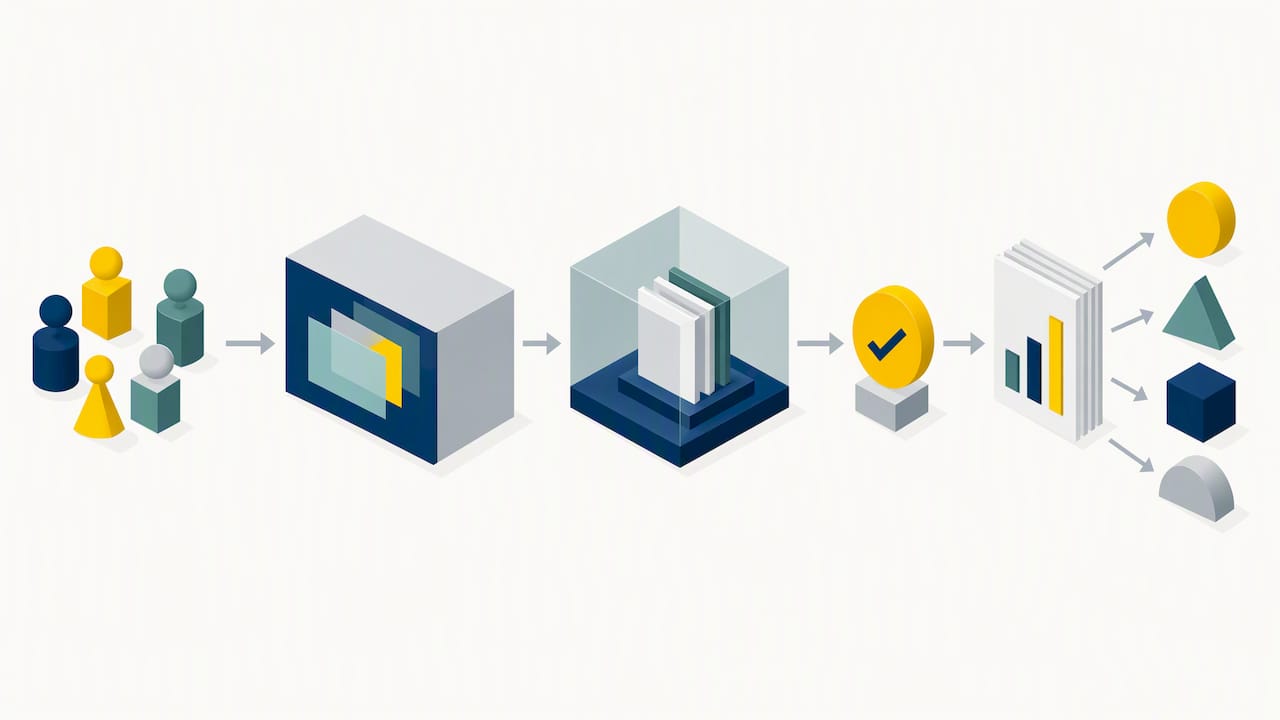
Pro Tip: Present board-level findings as a one-page evidence summary with links to the full data, since committees act faster on a clear outcome statement than on a lengthy appendix.
We work across financial services, consumer brands, technology and other regulated and competitive sectors, and that breadth shapes how we build evidence packs: commercially useful, and structured to withstand scrutiny. Typical deliverables for financial services clients include:
Our finance and professional services work shows how these pieces fit together in practice. Choosing a research partner for this kind of work means asking whether they can translate findings into something a risk committee can act on, not only a satisfied customer base.
Board-level ownership of customer outcomes needs to move beyond a quarterly satisfaction slide. Management information should trace a direct line from research finding to governance decision, not sit in a separate reporting silo. And fraud and trust questions deserve the same strategic weight as product performance, given how fast AI-enabled scams are evolving.
Research programmes map directly onto the checklist above: NPS and CX studies that capture outcomes alongside satisfaction, vulnerability-sensitive segmentation, and management information dashboards built for governance review rather than general reporting.
Engagements run through our Insight Partner plans, from Foundation to Strategic, depending on the depth and frequency your governance cycle needs. A short discovery conversation is the easiest way to see which shape fits your current reporting gaps.
This article is general information, not a substitute for advice from a qualified financial advisor. Consult a qualified financial professional about your own circumstances before acting on anything here.
A customer segmentation study is a common example: surveying customers to group them by needs, behaviour or vulnerability characteristics, then using those groups to design targeted support or communications. Depth interviews following a product launch are another, used to understand why customers responded the way the quantitative data shows.
Rising AI-enabled fraud and social engineering, continued growth in Open Banking-enabled payments, and tighter links between customer research and Consumer Duty reporting are the clearest shifts. Open Banking Limited’s 2025 data shows how quickly these payment journeys have scaled, which is reshaping what firms need to research.
Most programmes combine Net Promoter Score, Customer Satisfaction and customer effort with outcomes-based measures tied to Consumer Duty, such as time to resolution. Journey-stage satisfaction, captured close to the moment of experience, adds detail that annual surveys miss.
Vulnerability fluctuates with life events, so point-in-time surveys can miss customers who become vulnerable temporarily. Longitudinal tracking and accessible research formats, including WCAG-compliant options, help capture a fuller and fairer picture for governance and fair-value assessments.
A strong brief states the business or regulatory decision it needs to inform, sets measurable decision metrics, specifies the sample including vulnerable cohorts, and defines how outputs will feed management information. Skipping any of these steps is the most common reason research fails to change a decision.