

July 6, 2026

7
min read
Why customer needs research matters for growth
Customer needs research gives businesses the evidence to understand expectations, reduce churn, challenge internal assumptions and make better strategic decisions.

Customer needs research gives businesses the evidence to understand expectations, reduce churn, challenge internal assumptions and make better strategic decisions.

Customer needs research is the systematic process of gathering and analysing evidence about what customers want, expect, and experience, so that business decisions rest on fact rather than assumption. Organisations that integrate Voice of Customer (VoC) research into strategic planning see up to 41% higher revenue growth and 51% better retention than those relying on internal guesswork. Those figures are not marginal gains. They represent the difference between a brand that grows and one that stagnates. Understanding why customer needs research matters is the starting point for any marketing professional or business leader who wants decisions grounded in evidence, not opinion.
Retention is where the financial case for customer research becomes undeniable. 40% of customers stop engaging with a brand after a single negative experience caused by unmet expectations. That figure means one poorly managed interaction can erase years of brand investment.
The psychological mechanism behind this is well established. Expectancy-Disconfirmation Theory explains customer satisfaction as the gap between what a customer expected and what they actually experienced. When experience falls short of expectation, dissatisfaction follows. When it meets or exceeds expectation, loyalty deepens. Research gives you the evidence to close that gap deliberately, rather than hoping your product or service lands well.
Managing customer expectations proactively prevents churn by aligning perceptions with delivered experiences. Organisations that research expectations continuously are not reacting to complaints. They are removing the conditions that create complaints in the first place.
Customer needs research supports retention in three specific ways:
Why customer retention research matters is not a separate question from why customer needs research matters. They are the same question asked from two directions.
The most dangerous assumption in any organisation is the belief that familiarity with a product equals understanding of the customer. Familiarity creates internal bias. Teams that have worked on a product or service for years mistake their immersion for the customer’s perspective. The result is strategies built on what the team believes customers want, rather than what customers actually need.
This bias is not a failure of intelligence. It is a structural problem. The longer a team works inside a business, the harder it becomes to see that business from the outside. Assumptions go untested. Language that confuses customers becomes normalised internally. Barriers that stop people buying go unnoticed because no one inside the organisation experiences them.
Numbered below are the four most common internal misconceptions that customer research corrects:
The importance of customer research is not just that it tells you about customers. It is that it tells you where your organisation’s internal view has drifted from reality.
Scale matters in customer research. Industry experts recommend a minimum of 100 customer interactions or interviews to generate insight with enough depth to act on confidently. Fewer interactions produce findings that feel compelling but reflect individual variation rather than genuine patterns.

The method matters as much as the volume. Surveys capture what customers say they do. Observation captures what they actually do. Observation reveals needs that customers cannot articulate, often because they have adapted to a problem through workarounds so habitual they no longer notice them. A customer who has built a spreadsheet to compensate for a missing product feature will not mention that feature in a survey. They will mention it in a contextual interview or a usability observation.
Continuous research programmes outperform episodic studies over time. Triggered interview programmes can cost as little as £400 per month for 20 churn events, while building compounding intelligence that a one-off study cannot replicate. The value of continuous research is not any single finding. It is the pattern that emerges across dozens of findings over months.
Pro Tip: Pair every quantitative survey with at least ten in-depth interviews on the same topic. The survey tells you what is happening. The interviews tell you why. Neither is sufficient alone.
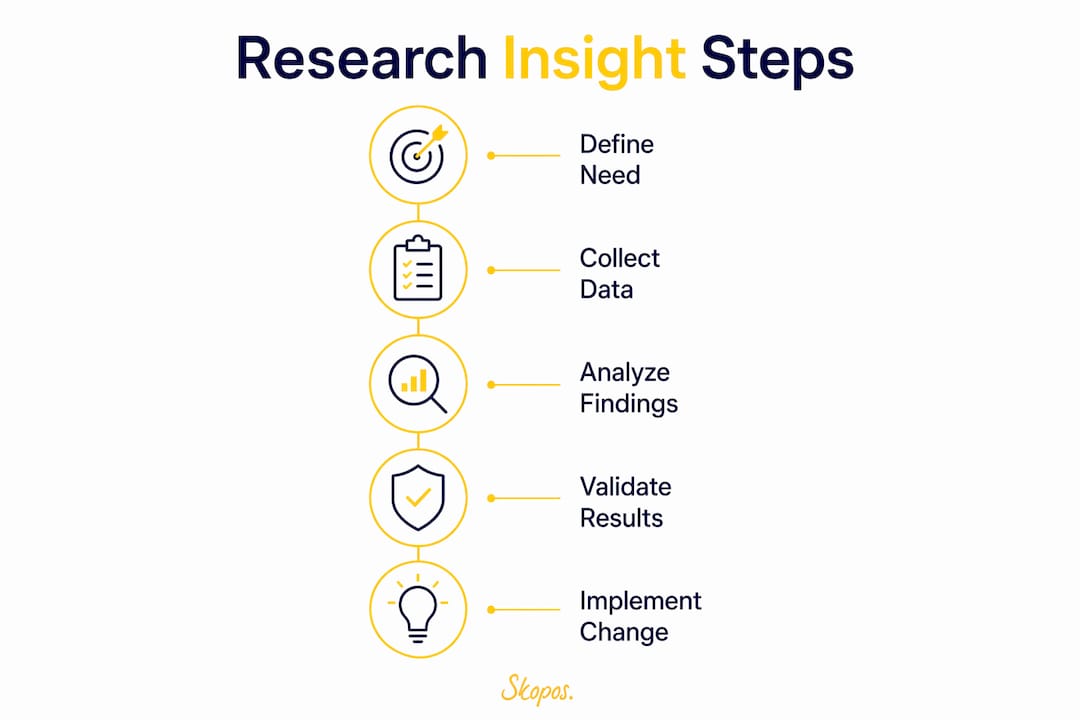
Understanding customer demands at this level of rigour is what separates organisations that react to churn from those that prevent it. For guidance on identifying your ideal customer through structured interview programmes, the principles of depth and scale apply equally in sales and research contexts.
Voice of Customer research is the correct starting point for strategic planning, not a validation step at the end. Organisations that treat research as a final check on decisions already made gain little from it. Those that use it to shape decisions from the outset gain the revenue and retention advantages the evidence supports.
Practical integration looks like this:
The benefits of customer needs analysis compound when research is embedded in planning rather than bolted on. A single study produces a snapshot. A continuous programme produces a living picture of how customer expectations are shifting, which is the only picture that supports genuinely responsive strategy.
The role of customer feedback within this process is not passive. Feedback collected, analysed, and acted upon creates a visible loop that customers notice. Brands that demonstrably respond to customer input build trust faster than those that simply ask for it.
Customer needs research drives revenue growth, reduces churn, and corrects internal bias, making it the most commercially grounded investment a marketing team can make.
The most consistent pattern I see across organisations that struggle with customer engagement is not a lack of data. It is an excess of internal confidence. Teams that have built a product or run a service for several years develop a fluency with their own work that feels indistinguishable from customer understanding. It is not. Fluency with your own operations is the opposite of empathy with your customer.
The organisations that get this right share one habit. They treat customer research not as a project to commission when something goes wrong, but as a standing discipline that runs whether things feel fine or not. The most valuable research findings I have encountered did not confirm a problem the business already suspected. They revealed a problem the business had no idea existed, often one that had been quietly driving churn for months.
The shift from outside-in thinking to inside-out thinking happens gradually and almost invisibly. Research is the mechanism that reverses it. Not because it produces a report, but because the act of genuinely listening to customers, at scale and with rigour, changes how teams frame their own decisions. That cultural shift is harder to measure than revenue growth, but it is what makes the revenue growth sustainable.
My recommendation is straightforward. If your organisation has not spoken directly to at least 100 customers in the past twelve months about their needs, expectations, and experience, your strategy is built on assumptions. Some of those assumptions will be correct. You will not know which ones until you test them.
Skopos is a full-service market research consultancy working with brands across the UK, Europe, and international markets to turn customer evidence into clear commercial decisions. Whether you need qualitative depth interviews, quantitative surveys, customer segmentation, or continuous experience tracking, Skopos designs research that fits your strategic questions rather than a standard template. The team combines human judgement with modern research methods to produce findings that are trusted, specific, and straightforward to act on. If you are building a customer research programme or reviewing your current approach, the market research glossary is a useful starting point for aligning your team on terminology and method.
Customer needs research is the systematic process of gathering evidence about what customers want, expect, and experience, using methods such as interviews, surveys, and observation. It provides the factual basis for strategic decisions about product, marketing, and customer experience.
Research identifies the gap between customer expectations and delivered experience. Closing that gap reduces the likelihood of churn. 40% of customers disengage after a single negative experience caused by unmet expectations.
Industry guidance recommends a minimum of 100 customer interactions to generate findings with enough depth to act on confidently. Fewer interactions risk reflecting individual variation rather than genuine patterns.
Episodic research produces a snapshot at a single point in time. Continuous research programmes accumulate findings over months, building compounding intelligence that reveals how customer expectations shift and whether retention actions are working.
Teams immersed in their own product or service develop assumptions that feel accurate but are rarely tested against real customer behaviour. External research provides an objective view that internal teams cannot generate for themselves.