

October 14, 2026

13
min read
Car Clinic Research: 3 Rules for Product Teams Before Launch
Discover how car clinics help automotive brands test vehicle concepts, pricing, trims and positioning through physical, virtual and hybrid research.

Discover how car clinics help automotive brands test vehicle concepts, pricing, trims and positioning through physical, virtual and hybrid research.
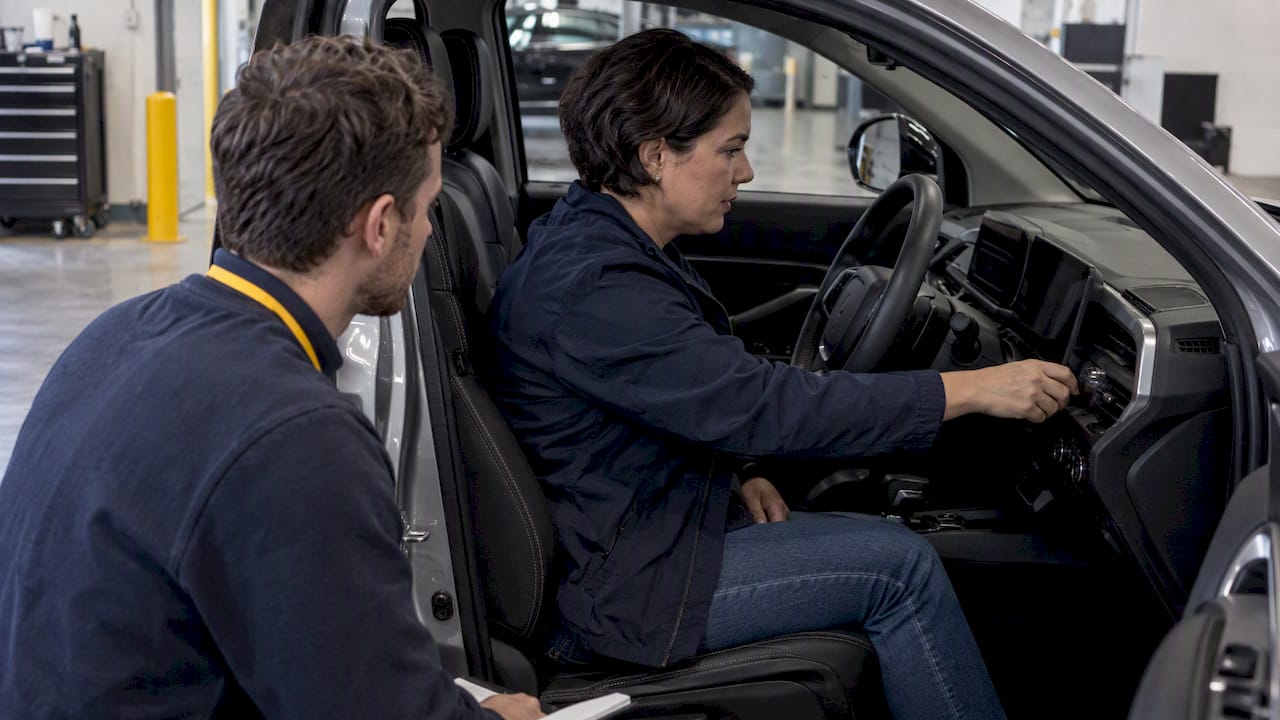
A car clinic is a head-to-head research event that lets target shoppers evaluate vehicles, physical or virtual, to validate positioning, pricing and trim choices before production. It answers pricing corridors, trim order, launch messaging and late-stage product refinements. Product managers, strategy leads and insight directors preparing pre-production decisions are the typical sponsors.
Car clinics earn their budget at specific decision points, not as a routine check-in. The clearest use-cases are concept validation against named alternatives, pre-production sign-off before tooling commits, price and trim optimisation, product-line planning across a range, and early volumetric forecasting to size demand.
Timing matters as much as design. Running a clinic too early, before design freeze on key surfaces, wastes the realism of physical stimuli; running it too late leaves no room to act on what you learn. Most sponsors schedule clinics once a design is stable enough to prototype or render convincingly, but before tooling and supplier commitments lock in trim and feature decisions. Product, pricing, marketing and engineering stakeholders should all have a seat at the design stage, since each will interpret the readout through a different lens.
A clinic is strong at telling you how target buyers rank attributes, which price points feel fair, and which trim combinations draw the most interest. It is weaker at predicting absolute sales volume or long-term brand equity shifts, which need broader tracking.
The stimulus choice shapes everything downstream, from facility cost to the realism of participant reactions. Static walk-around clinics let shoppers inspect exterior and interior details without starting the engine. Sit-in clinics add ergonomics and control-layout feedback. Dynamic drive clinics, the most expensive to run, capture ride and handling impressions that static formats cannot. Photo clinics, the lightest format, work well for early-stage concept screening when a full prototype does not yet exist.
Virtual reality and hybrid stimuli have matured enough to sit alongside physical formats rather than beneath them. A performance evaluation model published in MDPI found that some VR stimuli match the efficacy of physical prototypes on many attributes and outperform them on cost-efficiency, with hybrid approaches often combining the strengths of both. The same research notes that VR reduces transport and security burdens and adds scheduling flexibility, while flagging sound fidelity and data security as ongoing concerns.
Deciding between formats comes down to a few practical rules:
Pro Tip: Where budget allows, validate virtual stimuli against a small physical sub-sample before relying on VR data alone, since this confirms the virtual scores are not systematically skewed on key attributes.
A clinic’s validity depends on tight control of the environment as much as on the questions asked. Facilities need one-way viewing rooms so observers do not influence participant behaviour, even lighting that does not flatter or distort finish and colour, secure vehicle unloading and loading away from public view, and reliable audio-visual capture for later review.
Security and staging controls protect both the data and the product:
The Quirks practitioner guide on car clinics sets out this kind of facility, recruitment and staging best practice in detail, including the case for rigorous security alongside randomised viewing.
Getting the right people in the room matters more than almost any other design choice. Core screening variables include purchase timeframe (typically within the next six to twelve months), segment fit against the vehicle’s intended buyer, household income bracket, and current vehicle ownership or lease status.
Sample size and site count are usually a trade-off against budget. A single-city sample is cheaper but risks hometown bias, where local tastes or dealer relationships distort findings; multi-site fieldwork costs more but gives a more representative read. Incentive levels need to be realistic enough to protect show rates, since no-shows waste expensive facility time.
Segmentation plans also change how you read the data. A high-intent sample (active, near-term shoppers) tends to give sharper, more decisive scores, while a broad consideration sample gives a wider but softer read on appeal. Deciding which to use, or running both, should follow directly from the business question the clinic exists to answer.
The instruments you choose should map directly to the decision at hand, not to habit. Structured scoring frameworks for aesthetics, perceived quality and ergonomics give consistent, comparable ratings across participants and sites, which matters when a sponsor needs to compare this launch against a previous one.
Choice modelling and conjoint analysis are the workhorses for pricing and trim decisions. The Quirks guide describes how choice modelling embedded in clinic fieldwork yields willingness-to-pay estimates and price elasticity insights, which translate directly into a price corridor and a ranked set of attribute utilities for trim planning.
Moderated qualitative probes and observational measures add the behavioural texture that scores alone miss: how long someone dwells at the boot, where they touch first, how they sit before adjusting the seat.
Sequencing protects the quality of all three. Capture unaided, open-ended reactions first, then move to structured scoring tasks, then run choice modelling last. The Quirks guide recommends this order specifically because later quantitative tasks can contaminate earlier open-ended impressions if run first.
Pro Tip: Triangulate the quantitative scores against the qualitative probes in the same readout, since a strong numeric score paired with hesitant open-ended comments often signals a feature that looks good but will not convert.
Sponsors should expect a specific set of outputs, not a loose summary of impressions. Standard deliverables include ranked attribute scores against competitor benchmarks, a conjoint-derived price corridor, recommended trim and feature priorities, and an executive decision brief that ties findings to specific actions.
A GreenBook case study of a multi-city car clinic for a global OEM launch shows this in practice: the fieldwork produced a clear evidence-based picture of where the new vehicle won against competitors, which directly shaped trim, messaging and pricing decisions used at launch. That kind of readout, mapped to concrete actions such as trim reprioritisation, messaging swaps or price corridor adjustments, is what commercial teams act on fastest.
Readouts should land early enough to hit the next product gate, usually a matter of weeks rather than months after fieldwork closes. A short post-launch tracking check, revisiting the same attributes with early buyers, confirms whether the clinic’s predictions held once the vehicle reached the market.
We design and run car clinics with experienced consultants shaping the fieldwork design rather than handing it to junior staff once the brief is signed off. Our approach uses modern tools to speed up analysis and reporting without losing judgement over what the numbers actually mean for your launch.
Because we work across various research methods, we can build a single clinic that captures unaided reactions, structured scoring and choice modelling in one coherent fieldwork plan rather than three disconnected exercises.
Our automotive, mobility and travel work reflects this approach across concept, pricing and launch decisions.
Participant consent needs to cover more than attendance. People taking part in a clinic should understand what is being tested, how their data and any recorded footage will be used, and how long that material will be retained before it is destroyed or anonymised. Where sessions are filmed for internal review, consent should specifically mention recording, not just participation.
Confidentiality protections run in two directions. Non-disclosure agreements bind staff, vendors and often participants themselves, given that an unreleased vehicle photographed or described publicly before launch can damage a manufacturer’s competitive position and, in some cases, create intellectual property exposure. Device checks and secure transport, covered earlier in the facility checklist, exist partly for this reason.
Fair treatment of participants also matters for data quality as well as ethics. Incentive levels should be proportionate to the time asked of participants, screening criteria should avoid discriminatory exclusions unrelated to the research question, and debrief sessions should give participants an honest account of how their feedback will be used. The Renault Group’s account of clinic testing describes these events as a decisive moment for checking whether a vehicle’s intended value lands with potential customers, which only works when participants feel they are being heard honestly rather than processed.
Specific consent, retention and confidentiality rules vary by market and by the personal data involved, so legal teams should review clinic protocols alongside the research design rather than after fieldwork is booked.

A clinic answers a narrow, specific set of questions well. It rarely stands alone as the basis for a launch decision, because it captures a moment in time with a defined sample rather than tracking how perceptions shift over months.
Pairing clinic findings with brand tracking data shows whether the attributes that scored well in a controlled room also move awareness and consideration in the open market once advertising starts. Segmentation research sharpens who the clinic sample should represent in the first place, since a clinic built around the wrong buyer segment produces clean but misleading scores. Pricing and value perception studies run outside the clinic environment can cross-check whether the price corridor derived from conjoint tasks holds up against broader market sentiment, away from the controlled setting of a staged evaluation.
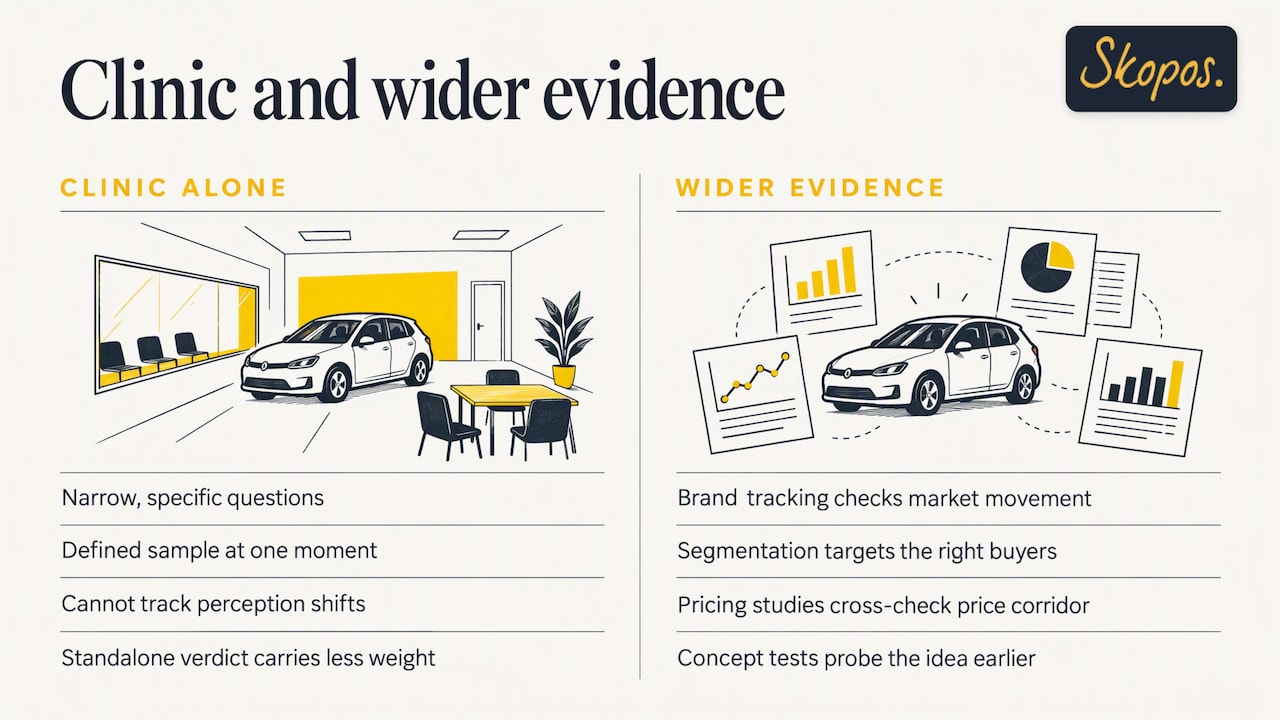
The practical habit worth building is treating the clinic as one input into a wider evidence base rather than a standalone verdict. A trim decision backed by clinic scores, a broader segmentation study and a pricing read from the open market carries more weight in a product gate review than a clinic result taken in isolation. Teams running concept testing alongside clinics often find the two methods answer different parts of the same question, with concept testing probing the idea earlier and the clinic validating the executed form.
The format of the readout determines whether findings get used or filed away. An executive decision brief, typically no more than a handful of pages, should open with the recommendation and the decision it supports, not with methodology or sample composition. Supporting detail, full scoring tables, conjoint output and verbatim quotes, belongs in an appendix that interested stakeholders can dig into later.
Different audiences need different emphasis from the same data. Product and engineering teams want specific attribute scores and trim-level detail they can act on directly. Marketing and pricing stakeholders want the price corridor and messaging implications stated plainly, in terms they can take into a campaign brief. Executive sponsors want the headline recommendation and the risk of not acting on it, stated in a sentence or two.
A short live readout session, rather than a report sent by email, tends to surface the follow-up questions that matter before a decision gate closes. The GreenBook case study notes that an executive-ready readout mapping findings to specific launch actions, trim shifts, messaging swaps, price adjustments, is what commercial teams value most, which only works when the report is built around decisions rather than data points.
Three rules keep clinic commissioning disciplined and the output usable.
The clinics that change outcomes are the narrow ones built around one hard question, not the broad ones trying to answer everything at once.
We run car clinics as a structured process: briefing to understand your decision point, fieldwork design matched to that decision, on-site or virtual fieldwork, analysis combining structured and qualitative instruments, and an executive readout built around recommendations rather than raw data.
Our services most relevant to a clinic programme include concept and product testing for early-stage validation, pricing and value perception studies for conjoint-based price corridors, and ad and creative testing once clinic findings reshape launch messaging. Where facility teams need specialist AV or fieldwork suppliers, an agency review guide can help with vendor shortlisting.
If you have a launch decision that needs evidence behind it, our insight partner plans set out how an ongoing research relationship works, or you can get in touch directly to scope a car clinic for your next vehicle decision.
A car clinic is a research event where target buyers evaluate one or more vehicles, physical or virtual, under controlled conditions to test concept, trim, pricing and positioning decisions. It typically combines structured scoring, choice modelling and qualitative probes in a single session.
Sample size depends on how many trim variants or price points are being tested and how many sites the fieldwork covers, with multi-site programmes generally needing larger total samples to avoid hometown bias. The Quirks guide to car clinics sets out recruitment and screening practice that shapes these sizing decisions.
VR stimuli can match physical prototypes on many attributes and offer better cost-efficiency, according to a performance evaluation model published in MDPI, though sound fidelity and data security remain open concerns. Many teams use hybrid approaches that combine virtual and physical stimuli rather than relying on one exclusively.
Typical deliverables include ranked attribute scores against competitors, a conjoint-derived price corridor, trim and feature priority recommendations, and an executive brief that ties each finding to a specific action. A GreenBook case study shows how this kind of readout directly shaped trim, messaging and pricing decisions for an OEM launch.
Clinics work best once a design is stable enough to prototype or render convincingly, but before tooling and supplier commitments lock in trim and feature decisions. Running one too early wastes stimulus realism, while running one too late leaves no time to act on the findings.